Journeys
PROGRAM NOTES
Vier Letzte Lieder (Four Last Songs)
Richard Strauss
The last years of Richard Strauss (1864-1949) were a time of complicated emotions. This was a period of intense creative energy that some commentators have called his Indian Summer. During this time, he composed his Horn Concerto No. 2, Metamorphosen, and the Oboe Concerto. At the same time, by 1945 his beloved Germany was in ruins. In addition to the human ravages of war, symbols of the nation's high culture - the Dresden Opera House, Munich Opera, and the Vienna State Opera among them - had been destroyed, and Strauss was in despair.
It was his son, Franz, who helped convince the composer, then in his 80s, to return to writing lieder (art songs). His efforts influenced Strauss to compose these four songs for solo soprano and orchestra, which he completed in 1948. Published posthumously in 1949 by Erst Roth as Vier Letzte Lieder ("Four Last Songs"), they stand among the most admired works of Richard Strauss.
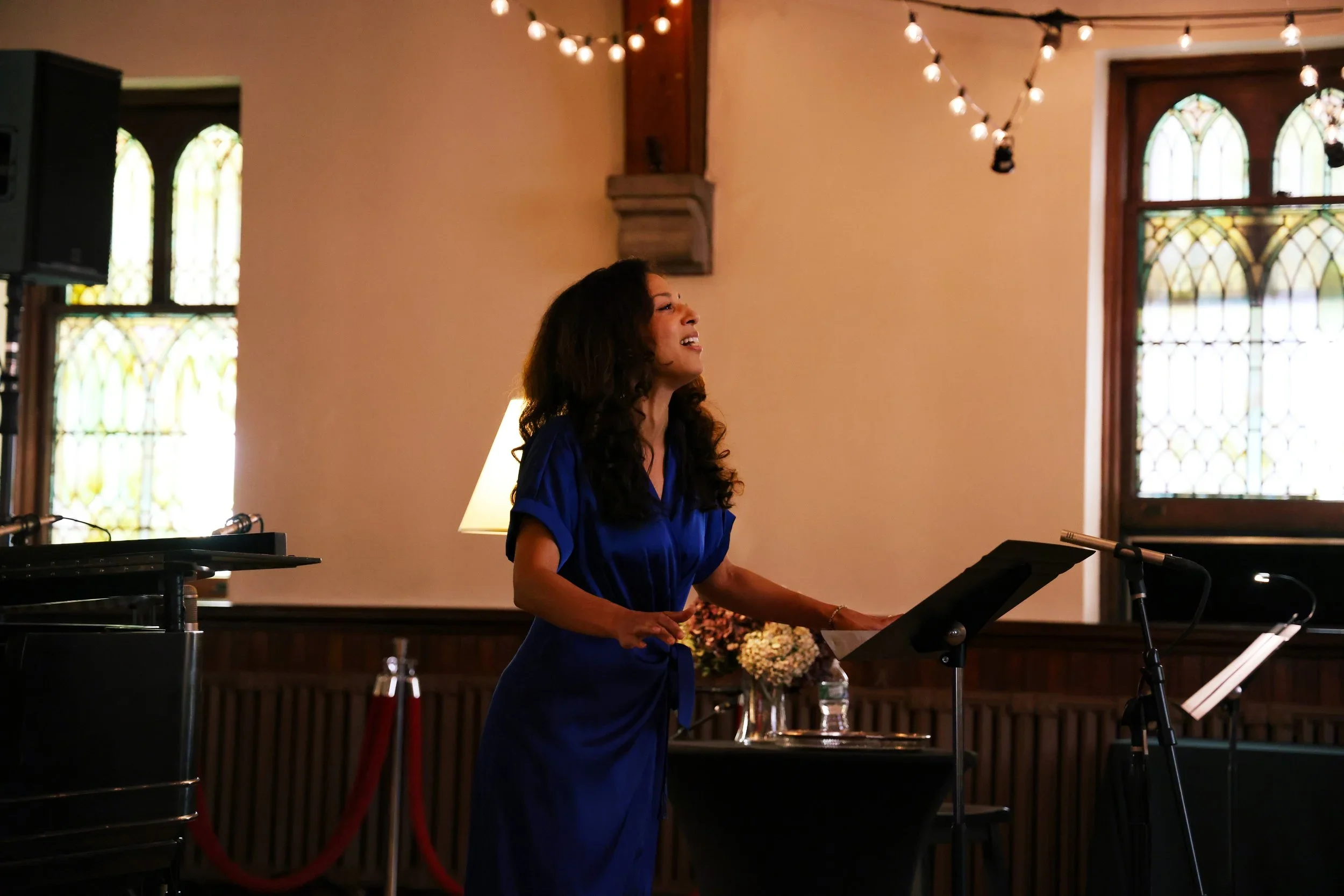
Written within a year of his own death, these pieces can be heard as musical meditations on death through nature, and death as a release from earthly bounds and worries. Musical scholar Bryan Gillam gives us a complementary interpretation, calling these "a final love letter to his wife of nearly 60 years, the soprano Pauline de Ahna." The lyrics for three of the four songs were written by Hermann Hesse — Früling (Spring), September, and Beim Schlafengehen (Upon Going To Sleep), while the final song — Im Abendrot (At Sunset) was by Josef von Eichendorff. The Four Last Songs premiered May 22, 1950 at the Royal Festival Hall, London by the Philharmonia Orchestra under the baton of Wilhelm Furtwängler with soprano soloist Kirsten Flagstad.
An American in Paris
George Gershwin
“It's not a Beethoven Symphony, you know... It's a humorous piece, nothing solemn about it. It's not intended to draw tears. If it pleases symphony audiences as a light, jolly piece, a series of impressions musically expressed, it succeeds.”
So noted George Gershwin after the December 13, 1928 premiere of An American in Paris at Carnegie Hall. It was another triumph for Gershwin, whom Irving Berlin wryly described as the “first songwriter to become a composer”. Gershwin was basking in the success of Rhapsody in Blue (1924) while traveling in France with the idea of studying with Maurice Ravel. Though the Parisien composer declined (“why be a second rate Ravel when you can be a first rate Gershwin”) he did introduce the American to piano virtuoso Nadia Boulanger. After Ravel toured the US in 1928, Gershwin arranged a second trip to Paris, where such luminary expatriates as Ezra Pound, Ernest Hemingway, F Scott Fitzgerald and Pablo Picasso were then living and working. It was a heady time.
During this visit, he composed a tone poem about a traveler to the city of lights, as he strolls about the city, absorbing the sights, sounds and ambiance of Paris. As an aside, this was not the first composition to include car horns. That distinction goes to “Fivver Ten Million” by Frederick Converse (1927). Gershwin includes four such horns, which the score indicates as A, B, C and D. This notation appears to have caused some confusion, with orchestras performing the piece with taxi horns tuned to these notes — the proper scoring, however, is for horns in A, A flat, B flat and D. Film aficionados will also know American in Paris as a a musical comedy starring Gene Kelly, featuring a swath of Gershwin’s music — including the title piece — and released to critical acclaim in 1951.
Overture in C major
Fannie Mendelssohn Hensel
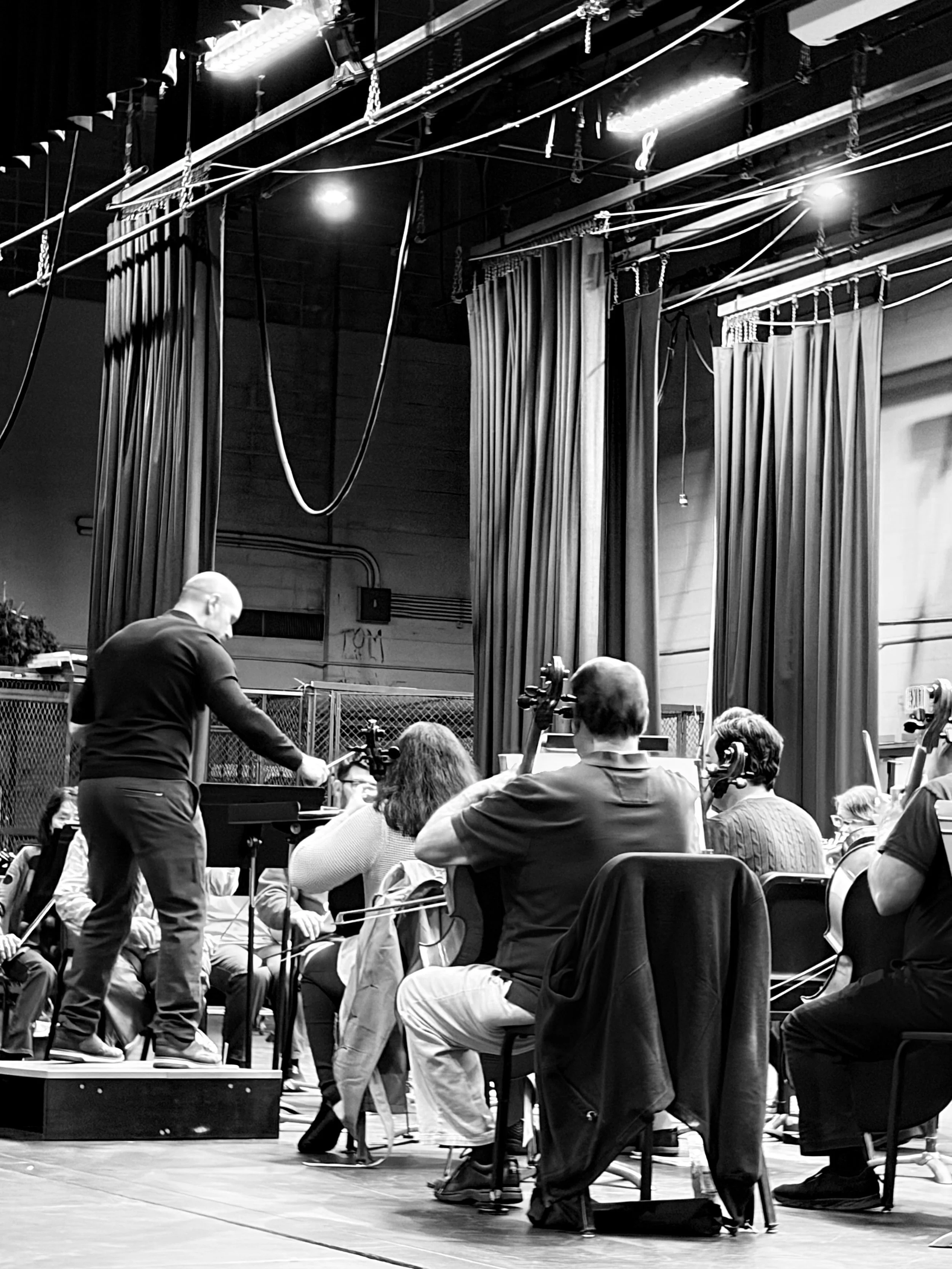
In their youth, Fannie Mendelssohn dazzled with her musical talent every bit as much as her soon to be famous brother Felix. Unfortunately, it was not thought proper that women of the early 19th century should draw attention to themselves through the performing arts. As a result, although she composed some 500 pieces, none were published during her lifetime. Moreover, this Overture was her sole foray into orchestral writing. She conducted it for the first time during one of many family concerts in Berlin, in 1834. For this premiere, we see her using the recently invented conductor’s baton.
The Overture is scored for standard classical orchestra. Written in sonata form, it features dramatic dynamic variation, call-and-response motifs, and an energetic, playful finale. It was not rediscovered until 1992, when it was recorded by the Women's Philharmonic under Maestra JoAnn Falletta.
La Forza del Destina, Overture
Giuseppe Verdi
“The Power of Fate” (or, literally, The Force of Destiny) was first performed in St Petersburg, Russia in 1862. This is a tragic melodrama in four acts, replete with love and guilt, vengeance and death. La Forza was the 23d opera for the prolific Giuseppe Verdi, composed on commission from the St. Petersburg Imperial Theater for the sum of 60 000 francs, plus expenses. Six opening declarative notes in the brass create an atmosphere of heaviness and foreboding, making the Overture as evocative as the body of the opera itself. This “fate” motif returns time and again, descending on lyrical passages depicting the star crossed characters of this story.
Though La Forza was not an unqualified stage success at its premiere, it did go on to play all of the major European capitals. Revisions, both to the music and the libretto, followed. The work finally came to La Scala in 1869, and the opera remains in the repertoire, the Overture in particular being frequently performed by orchestras as a stand-alone piece.